Goldenrod: Autumn’s Golden Gift and Its Herbal Heritage

There is something unmistakably autumnal about goldenrod. Its yellow blossoms brighten fields, fence lines, and country roads just as summer begins to loosen its hold. Here in Oklahoma, those golden sprays feel like a familiar welcome to the changing season.
For those of us drawn to plants and the old ways of working with them, goldenrod offers more than a beautiful view. It carries a history of herbal traditions, provides food for pollinators, and invites us to learn more about what grows close to home.
Where Goldenrod Comes From
Goldenrod belongs to the genus Solidago, part of the aster family. Many species are native to North America, including Canada goldenrod (Solidago canadensis), which grows across much of Oklahoma and generally flowers from July through October. Despite its name, it is very much at home beyond Canada!
Other goldenrods have roots overseas. European goldenrod (Solidago virgaurea) is native across a broad region of Europe and Asia. Goldenrod therefore has herbal histories on both sides of the Atlantic. North American species were already growing here long before European settlement.
Even its botanical name reflects its herbal reputation. Solidago comes from a Latin word associated with “making whole.”
Common Goldenrod Species in Central/Eastern Oklahoma
Canada Goldenrod (Solidago canadensis): A tall, common perennial with reddish-purple stems and small yellow flowers that grows statewide in open fields and prairies.

Stiff Goldenrod (Oligoneuron rigidum): An upright plant with rough leaves and flat-topped clusters of yellow flowers found in prairies and open woods.

Ouachita Goldenrod (Solidago ouachitensis): A rare, shaded-slope specialist found specifically in the Ouachita Mountains extending into eastern Oklahoma.
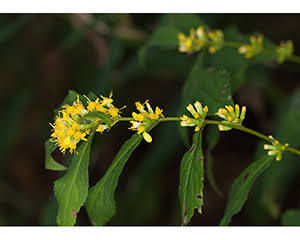
Downy Ragged Goldenrod (Solidago petiolaris): A drought-tolerant species with yellow flower clusters that grows well in sunny, native areas.

Goldenrod and the Old Ways
Indigenous peoples developed knowledge of goldenrod within their own distinct cultures and communities. The resource Indigenous Medicinal and Food Plants of the Cayoose Creek Band of Sekw’el’was describes historical uses of Canada goldenrod, including teas for colds and respiratory complaints and poultices for wounds and skin conditions. These records represent particular traditions, rather than one practice shared by every Indigenous nation.
European herbal traditions became especially associated with goldenrod’s use for urinary complaints. Today, the European Medicines Agency recognizes preparations of Solidago virgaurea for traditional use in increasing urine output as an aid for minor urinary complaints. This recognition is based on longstanding use rather than conclusive clinical evidence.
Keeping these stories alive also means being clear about what they tell us: historical use helps us understand a plant’s place in herbal practice.
Traditional Uses of Goldenrod Salve
Goldenrod-infused oil and salve are used in contemporary herbal practice as massage preparations for tired, sore muscles and everyday aches. A salve also helps soften dry, chapped skin, with much of that moisturizing benefit coming from its oil and beeswax base. Evidence that goldenrod salve itself treats pain or inflammation in people is limited.
For home use, think of it as a botanical massage balm for intact skin. Historical accounts of wound poultices do not establish that a homemade oil-based salve is appropriate for open wounds.
How to Make a Goldenrod Salve
Start with correctly identified, fully dried goldenrod flowers and leaves. Purchase from a reputable herb supplier or use a confidently identified harvest from an uncontaminated location. Record the botanical species whenever possible.
First, prepare an infused oil:
1. Loosely fill a clean, completely dry glass jar about halfway with dried goldenrod flowers and leaves.
2. Add olive oil or carrier oil of choice such as Castor, Jojoba, or Vitamin E until the herbs are generously covered.
3. Cap and allow to infuse for four to six weeks, keeping the plant material submerged and checking regularly for moisture or mold.
4. Strain through fine cloth into a clean, dry container.
Use fully dried herbs for this method, because moisture from fresh plants increases the risk of spoilage. Discard oil that develops mold or a rancid smell. This preparation is intended for external use.
To make a firm salve, combine:
· 4 ounces goldenrod-infused oil, by weight
· 1 ounce beeswax, by weight
Warm gently in a double boiler until the beeswax melts, then stir and pour into clean, dry tins or jars. Allow to cool before capping. For a softer balm, remelt and add a little more oil. Label with the ingredients, botanical species, date, and “For external use only.”
Patch-test before wider use, apply only to intact skin, and stop if irritation develops. Keep water out of the finished salve.
Traditional Uses of Goldenrod Tincture
A tincture extracts plant constituents in a mixture of drinking alcohol and water. Goldenrod tinctures have two commonly discussed roles in herbal practice:
· Minor urinary complaints: European goldenrod preparations have traditionally been used to encourage urine flow. This does not mean they cure urinary infections, remove kidney stones, or treat kidney disease. The European guidance concerns Solidago virgaurea and defined preparations, rather than every homemade goldenrod extract.
·
· Seasonal allergy symptoms: Some herbalists use goldenrod tincture for runny noses, sneezing, and watery eyes.
·
·
· How to Make a Goldenrod Tincture
For a simple dried-herb preparation, you will need dried goldenrod flowers and leaves, a clean glass jar, and 80–100 proof vodka, containing 40–50% alcohol.
1. Loosely fill the jar one-third to halfway with the dried herb.
2. Add vodka to cover completely, leaving room for the herbs to expand.
3. Cap and label with the botanical species, alcohol strength, and starting date.
4. Store in a cool, dark cupboard for six to eight weeks. Shake regularly and keep the herbs submerged.
5. Strain through fine cloth and transfer the liquid to labeled amber bottles.
Use only food-grade drinking alcohol, never rubbing or denatured alcohol. Keep away from heat and out of children’s reach. This folk method produces variable-strength extracts, so it does not provide a standardized dose. Seek individual guidance before taking it medicinally.
Goldenrod in the Teacup and Garden
Some goldenrods also have a history as beverage plants. Sweet goldenrod (Solidago odora) has aromatic, anise-scented leaves used for tea. That flavor belongs to this particular species; goldenrods are not all interchangeable in taste or use.
Out in the garden, goldenrod offers nectar and pollen to insects, including bees and butterflies, and seeds for birds. Leaving plenty of flowers standing allows wildlife to share in the season’s abundance.
Does Goldenrod Cause Fall Allergies?
Goldenrod often gets blamed because its yellow flowers are so noticeable when autumn sneezing begins. Ragweed, which blooms around the same time, is usually the bigger culprit. Ragweed releases windborne pollen, while goldenrod relies largely on insect pollination.
That does not make goldenrod allergy-free. People sensitive to the plant may still react when handling or using it.
Working With Goldenrod Thoughtfully
Avoid goldenrod preparations if you are allergic to goldenrod or other aster-family plants. Medicinal oral use is not recommended during pregnancy or breastfeeding, alongside prescription diuretics, or when heart or kidney disease requires restricted fluid intake. Consult a healthcare professional before internal use if you take medication or have a medical condition.
Do not use a tincture to self-treat a suspected urinary infection or unexplained swelling. Fever, painful urination, or blood in the urine needs medical attention.
At Harvest Moon, we appreciate the patience involved in learning a plant: discovering its name, understanding its history, and taking care with its preparation. Goldenrod reminds us how much there is to notice in a familiar landscape.
Sometimes the richest stories are growing right beside the fence.
For educational purposes. Traditional uses are shared as herbal history, not as medical advice. Homemade preparations are not intended to diagnose, treat, cure, or prevent disease.


Comments